Mattress Materials · Buying Guide
Natural Latex Organic Mattresses: How to Compare Feel, Support, and Materials
A latex mattress can feel buoyant, gently cushioning, or unexpectedly firm, depending on how it is made. Comparing the layers beneath the cover—not just the words on a label—helps reveal whether a mattress matches your sleep position, comfort preferences, and material priorities.
Latex begins as a milky sap tapped from rubber trees. Transformed into foam, it becomes a resilient material that compresses under pressure and springs back when weight is removed. That quick response is one reason latex beds feel different from many memory foam models: rather than slowly molding around the body, latex tends to push back more promptly. Yet “latex mattress” describes a broad family, not one uniform sleeping experience.
Some mattresses use latex throughout their comfort and support layers; others combine a latex surface with springs, foam, or other materials. Firmness, thickness, latex type, and the construction beneath the surface all matter. The word “organic” adds another layer of questions: it may refer to a certified material or to a manufacturer’s broader description of natural ingredients. A careful comparison starts by separating those claims.
This guide examines how construction influences feel and support, what to look for in material descriptions, and how to assess whether a natural latex organic mattress suits your needs. The aim is not to declare a single best design, but to help you read the details with confidence.
Start with the feel: buoyancy, contour, and pressure relief
Imagine settling onto a mattress after a long day. One surface lets the body sink gradually, enclosing the shoulders and hips. Another gives way beneath those areas but rises readily to meet movement. Neither sensation is automatically superior. The right balance depends on what feels comfortable and how well the surface accommodates your body in your usual sleeping position.
Latex is often associated with a buoyant, responsive feel. When a sleeper shifts position, the material generally rebounds quickly, making it easier to move across the bed than on a deeply contouring surface. This response can suit people who dislike feeling enveloped or who change positions during the night. But latex can still provide meaningful cushioning: a sufficiently thick, softer comfort layer may yield around prominent pressure points while the underlying layers offer resistance.
Pressure relief and support are related, but they are not the same thing. Pressure relief concerns how a mattress distributes load at contact points such as the shoulders, hips, and heels. Support describes how the mattress helps the body remain comfortably aligned rather than allowing heavy areas to sink excessively. A mattress may feel soft at the surface yet have a firmer core; another may feel uniformly firm with less local cushioning.
Descriptions such as “plush,” “medium,” and “firm” offer a rough starting point, not a universal measurement. Firmness is perceived differently according to body shape, weight, sleep posture, and personal preference. Whenever possible, test a mattress for long enough to relax in your normal position. If buying online, review the trial period, return terms, and any conditions that apply before ordering.
How sleep position changes the comparison
Sleep position affects where the body places pressure and how much cushioning may feel comfortable. It is a useful guide, not a prescription. People move between positions, and individual comfort varies, so consider your actual habits alongside any general recommendations.
- Side sleepers often feel concentrated pressure at the shoulders and hips. A more yielding top layer may help those areas settle into the surface, while enough underlying support keeps the torso from sinking too far. A mattress that feels firm in a showroom may feel quite different when the body rests on its side for several minutes.
- Back sleepers may prefer a balanced surface that cushions the lower back without allowing the pelvis to drop excessively. The right feel depends on body proportions and the mattress’s layered construction, not on firmness labels alone.
- Stomach sleepers sometimes prefer a more supportive, less yielding surface, particularly if a softer design causes the midsection to sink in a way that feels uncomfortable. Personal comfort and alignment remain the deciding factors.
- Combination sleepers may value responsiveness: a surface that rebounds quickly can make it easier to turn. Look for a comfort layer that still cushions the areas that bear the most pressure in each position.
When testing, notice more than the first impression. Spend time on your side, back, or stomach as you normally would. Pay attention to whether you feel pressure, whether changing position takes effort, and whether the surface feels comfortable without prompting you to keep adjusting. A brief sit on the edge tells little about how a mattress behaves during a full night.
Firmness is only part of the construction
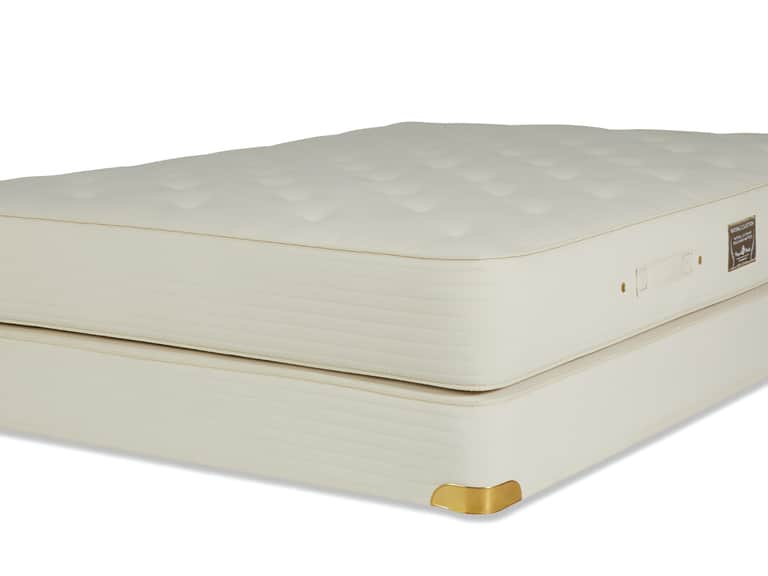
A mattress is a stack of materials working together. Its comfort layer is closest to the sleeper and has a major influence on initial softness, contour, and pressure relief. Beneath it, transition layers can moderate the change from a yielding surface to a firmer base. The support core carries much of the load and influences how deeply the mattress compresses overall. In an all-latex design, different latex layers may perform these distinct jobs; in a hybrid, coils may provide the main support beneath latex.
Ask how many layers the mattress contains, what each layer is made from, and how thick each one is. A detailed specification is more informative than a broad claim about “premium latex.” The same nominal firmness can feel different when one bed uses a thin comfort layer over a firm core and another uses several softer layers. Layer arrangement, density, and the sleeper’s body all contribute to the experience.
Also check whether the mattress is one-sided or designed to be turned. Some latex mattresses have a designated top and bottom, while others are built for rotation or flipping. Follow the manufacturer’s care instructions rather than assuming that every model should be handled the same way. A compatible foundation matters, too: the support surface should follow the mattress maker’s requirements for spacing, structure, and load.
For couples, consider motion transfer and edge support alongside firmness. Latex’s responsiveness may make movement feel lively, but actual motion isolation depends on the whole construction and the sleeper. A partner’s size, movement, and sensitivity can all affect the result. If possible, test the bed together and assess how the edges feel when sitting or lying near them.
Natural, synthetic, and blended latex
Natural latex is made using rubber-tree sap. Synthetic latex is produced from synthetic rubber, and blended latex combines natural and synthetic components. These terms describe different material origins; they do not, by themselves, tell you exactly how a mattress will feel or how long it will last. Construction and manufacturing quality also matter.
Read the product specification for a clear description of the latex in each layer. If the label says “natural latex,” ask whether that applies to all latex layers or only a portion of the mattress. A bed may also include non-latex materials such as cotton, wool, adhesives, fabric, or a spring unit. Those components can matter to shoppers with specific material preferences or sensitivities.
Some latex is made using the Dunlop process and some using the Talalay process. These are different manufacturing methods, and their resulting foams can differ in structure and feel. In broad terms, products made by either process can be produced in a range of firmnesses, so the process name alone does not establish which mattress will suit a sleeper. Look for the maker’s layer-by-layer description and, when available, a sample or an opportunity to test the bed.
There is no need to treat one production method as a guarantee of comfort or quality. A meaningful comparison includes the finished mattress: the latex specification, thickness, firmness, cover, overall design, and available quality documentation. Ask direct questions if a retailer’s terminology is vague.
What “organic” does—and does not—tell you
“Organic” can refer to the agricultural origin of a material, a certification that applies to particular components, or a marketing description used more generally. It does not automatically mean that every part of a mattress is organic, that the finished product has a particular firmness, or that the bed will be right for every sleeper. The useful question is not simply whether a mattress is called organic, but which materials are covered by which claims.
Look for the name of the certifying organization and identify the scope of its certification. Does it cover the latex, the cover fabric, the finished mattress, or another component? Is the certificate current and connected to the specific product being considered? Reputable sellers should be able to explain the claim and point shoppers toward relevant documentation. A certification mark is most useful when its meaning and scope are clear.
Likewise, “natural” and “chemical-free” are not precise enough on their own to describe a complete mattress. All physical materials consist of chemicals, and broad wording can obscure rather than clarify what is present. Seek specific information about composition, processing, finishes, and any relevant testing or standards. If a product claim is important to your decision, ask for evidence in writing.
Organic material preferences can be part of a thoughtful purchase, but they should be considered alongside comfort, construction, care, durability expectations, and price. A material label cannot substitute for an honest account of how the mattress is built.
The cover, temperature, and the feel at the surface
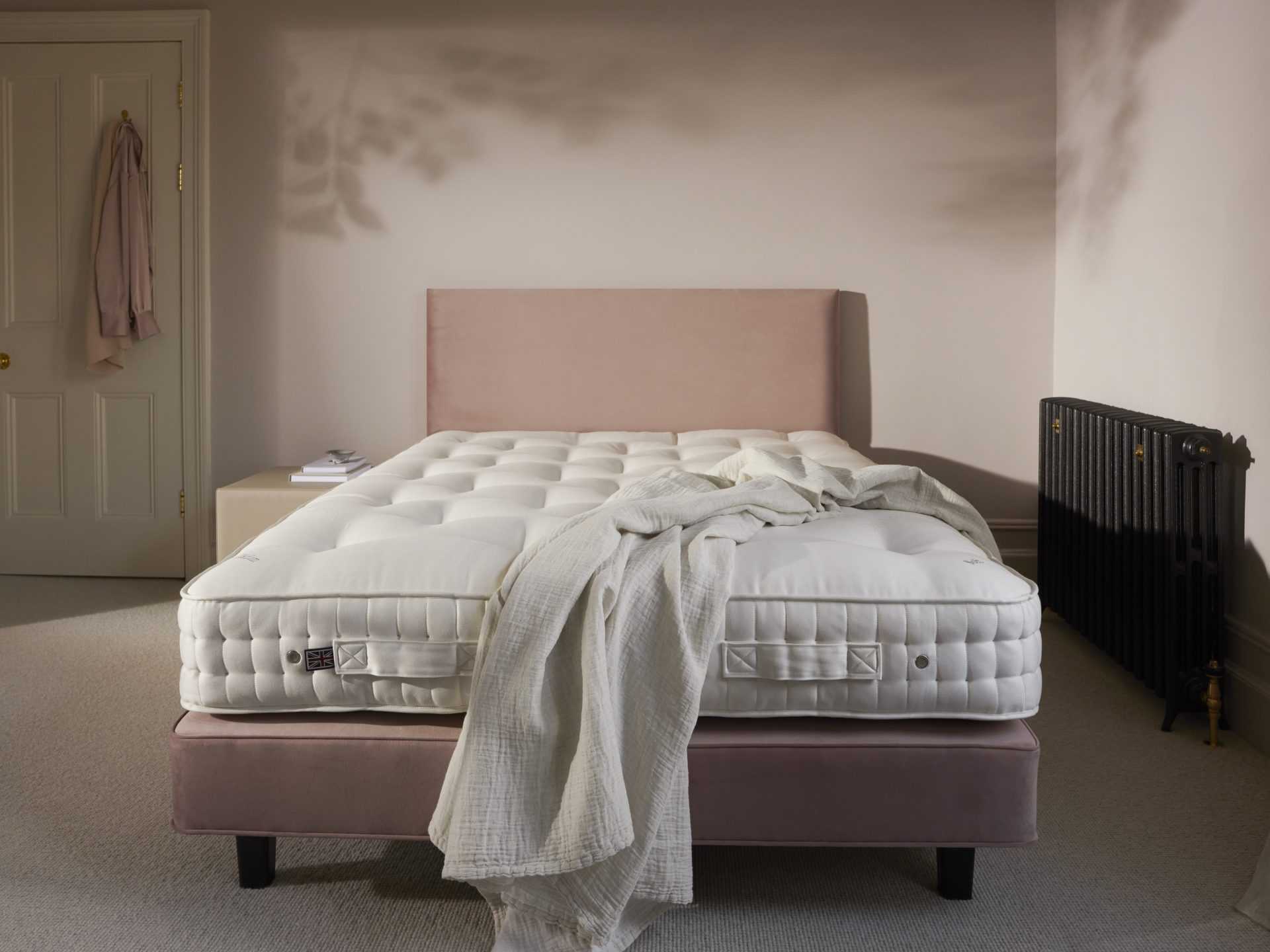
The cover is the first layer the body encounters, and it can influence texture, airflow, and how readily the comfort layers respond. Cotton and wool are common natural-fiber choices, though their presence does not make the entire mattress organic. Covers may be quilted or unquilted, removable or fixed, and made from one fiber or a blend. Read the specification rather than inferring composition from a name or appearance.
Temperature comfort is personal and shaped by more than the mattress. Bedding, room conditions, sleepwear, and an individual’s tendency to feel warm or cold all play a part. Latex is sometimes selected by people seeking a more responsive sleep surface, but no material can promise that every sleeper will remain cool. A breathable cover and suitable bedding may contribute to comfort; they are not a guarantee against overheating.
Ask whether the cover can be removed and how it should be cleaned. Some covers are not designed for home washing, and removing one may affect the warranty. A washable mattress pad can act as a practical protective layer; for example, a cotton or wool pad can be added according to its own care instructions. Check that any accessory fits securely and does not conflict with the mattress maker’s guidance.
Durability, care, and the details behind expectations
Latex is known for resilience, but durability is not guaranteed by the material name alone. Foam formulation, layer thickness, construction, use, foundation, and care can influence how a mattress performs over time. A persuasive durability claim should be accompanied by clear product details and warranty terms—not just a promise that the bed will last.
Read the warranty carefully. Note its duration, what counts as a covered defect, whether impressions must reach a specified depth, and whether the foundation must meet particular requirements. Understand who pays for transport or inspection and what happens if a claim is approved. A long warranty is not the same as a trial period: one addresses specified defects, while the other may provide a window to assess comfort under stated conditions.
Rotate the mattress if the manufacturer recommends it, use an appropriate support base, and protect the surface from spills. Avoid soaking latex or using cleaners that the maker has not approved. Natural materials may have a noticeable scent when new; if you have concerns about odor or sensitivity, ask the retailer about the product’s materials, ventilation guidance, and return policy before purchase.
Weight and handling deserve consideration. Latex mattresses can be heavy, particularly in larger sizes, making rotation, delivery, and moving more demanding. Confirm how the mattress will enter the room, whether setup is included, and whether future movement will require help.
A practical comparison checklist
Before comparing prices, put the main facts for each mattress in one place. That simple exercise can reveal where two products differ and where their descriptions leave important questions unanswered.
- Latex content: Is it natural, synthetic, or blended? Which layers contain latex?
- Layer map: What are the materials and thicknesses of the comfort, transition, and support layers?
- Feel: What firmness options are available, and can you test the mattress or use a trial period?
- Sleep fit: How does it feel in your normal position, including at the shoulders, hips, and lower back?
- Cover: What fibers are used? Is it removable, and what care is permitted?
- Certifications: What organization issued each certification, and which product components does it cover?
- Support base: What type of foundation is required, and what spacing or structural conditions apply?
- Terms: What are the trial, return, delivery, warranty, and maintenance requirements?
- Household needs: Does the design suit partners, pets, children, allergies, or other practical considerations?
Keep notes about your own impressions rather than relying on a retailer’s firmness scale alone. “Comfortable” can mean soft cushioning to one sleeper and lively support to another. A short written comparison helps bring those preferences into focus.
Questions worth asking before you buy
When a description is incomplete, ask the seller to clarify it. Useful questions include: What materials are in every layer? What does “organic” specifically describe? Is the latex natural, synthetic, or blended? What is the firmness of the comfort layer compared with the support layer? What type of foundation is acceptable? Can the cover be cleaned, and how? What costs or restrictions apply to a return?
Specific answers make it easier to compare products fairly. If a seller cannot explain a certification, layer composition, or care requirement, treat that gap as a reason to investigate further. For people with a diagnosed allergy or a significant sensitivity, product descriptions are not a substitute for individualized medical advice. Confirm material details with the manufacturer and consult a qualified health professional where appropriate.
Choosing for the sleeper, not the label
A natural latex organic mattress may appeal to someone who values responsive cushioning and wants detailed information about material origins. But the label alone cannot predict comfort. Two mattresses carrying similar descriptions may feel markedly different because their firmness, layer arrangement, thickness, cover, and support systems are not the same.
Begin with the sensations you prefer: a buoyant surface that responds quickly, a softer layer that contours more deeply, or something between the two. Match those preferences against the way you sleep, then check the construction and material documentation. Consider your foundation, room conditions, care expectations, and the terms that apply if the mattress proves unsuitable.
In a crowded mattress market, the most useful distinction is often the one found beneath the sales language. A clear layer map, an honestly described feel, and transparent certification details offer a stronger basis for comparison than a grand claim. With those facts in hand, shoppers can choose with greater care—and make the bed a more considered part of the landscape of everyday rest.
Frequently asked questions
Are all latex mattresses made from natural latex?
No. Latex foam may be natural, synthetic, or blended. Check which type is used in each layer rather than assuming the word “latex” identifies its origin.
Does organic mean a mattress is more comfortable?
No. Organic claims relate to material sourcing or certification scope, not a particular feel. Comfort depends on firmness, construction, body shape, sleep position, and personal preference.
Is a firmer latex mattress always more supportive?
Not necessarily. Firmness describes perceived resistance, while support concerns how the whole mattress accommodates the body. Layer design and individual needs affect both.
What should I compare first?
Start with latex type, layer composition, firmness, cover materials, certification scope, foundation requirements, care guidance, and return terms. Then test the surface in your usual sleeping position whenever possible.